
Developed in response to the COVID-19 pandemic, Viva’s Phone Mentoring Programme connected vulnerable families with trained local mentors through structured phone calls focused on child protection, mental health, family relationships, online safety and learning. Operating across 21 countries, the programme reached tens of thousands of children and caregivers who often lacked internet access. Results showed significant improvements in family wellbeing, communication, resilience and child protection, demonstrating how communities can provide holistic care even during crisis and isolation: 98% of families reported positive changes in their family relationships and wellbeing, and critically, 99% of children could identify a positive strategy to use when feeling worried or scared after participating. And, this critical learning has been used for other programmes, including one helping families in crisis due to the conflict in Ukraine.
Building Knowledge and Resilience
Launched in 2020, mentors were trained to help children and parents through an eight-week journey covering topics relevant to what people were going through during the fear and stress of the pandemic and resulting lockdowns. Using a simple phone call, the mentors listened and shared relevant information in line with six themes:

Theme 1: COVID-19 awareness and good communication.
Theme 2: Building strong relationships within our families.
Theme 3: Mental health and resilience: managing my emotions and staying calm.
Theme 4: Positive discipline and staying safe from abuse.
Theme 5: Staying safe online.
Theme 6: Learning together.
Mentors provided practical guidance, emotional support, and a vital connection to the wider community. This example from a participant in Costa Rica shows how the mentors were able to provide the coping tools one family needed: “In the first session of a family made up of a single mother and her 8-year-old daughter, the girl suffered a deep depression since she had no relatives in the country, no friends and the schools had closed. She had no access to homework or to the Internet. After meeting, we developed the themes, and she began to draw. The drawing of day one was sad, without colour, without hope. The following ones improved, and the last ones were with many colours and joys; all the themes were transcribed into drawings.”
Impact in Numbers
The programme proved remarkably effective in reaching families who might otherwise have been left behind. Many participants had little or no internet access, making phone calls one of the few reliable ways to provide support. The programme encouraged caregivers and children to take small, simple actions, including doing schoolwork together, talking more, or playing a simple game.
61,443 phone calls were completed across the programme.
10,750 families and 51,227 people, including over 35,000 children, were reached in 21 countries.
Families completed 141,822 positive actions, averaging 13.2 actions per family, helping strengthen relationships and reduce risks of violence and abuse.
Impact on Wellbeing
Feedback from families and mentors revealed meaningful improvements in wellbeing, communication and safety, as well as increased knowledge about COVID-19: “In the session on COVID-19, families learnt things they didn’t know already – they knew already about washing their hands, using sanitiser and wearing masks, but not in detail and now they know how to apply it practically and more specifically.” (Nepal). Parents reported less stress, stronger relationships and reduced violence in the home, while children developed healthier coping strategies and greater confidence in seeking help when they felt unsafe. In one significant case, a mentor from the Philippines shared that a life was possibly preserved because of the fact someone reached out: "A mother was about to end her life one evening because of the economic crisis due to the pandemic. But because of our phone calls, her plan to end her life was not realised." In another case, a Syrian refugee mother in Lebanon shared, "Thank you for calling me. You are the only one who calls me from Lebanon! I feel loved when I talk to you."
Expanding the Impact
There were three desired outcomes for the programmes:
Children are protected from abuse and danger, knowing how to keep themselves safe.
Children are educated for life, with the skills and experience needed to develop socially, emotionally, physically and spiritually.
Families are strengthened to increase care and support for children.
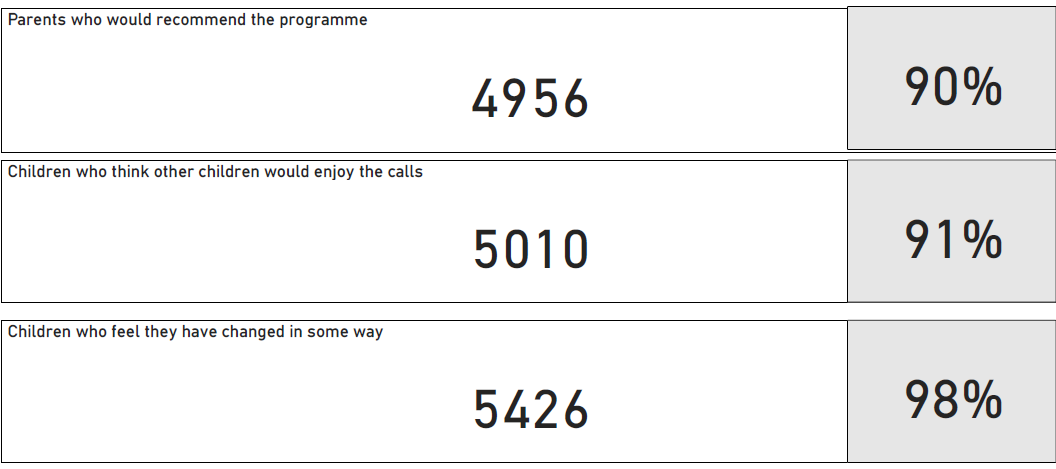
This July 2021 dashboard snapshot shows how this programme significantly impacted thousands of families, indicating that these outcomes were met in countries worldwide.
These outcomes remain relevant to children and families in other types of crisis, and the learning from Phone Mentoring was adapted into a programme called Resilient Families for Ukrainian families following Russia’s full-scale invasion. And that, in turn, contributed to the foundations of Hope Groups – a parenting programme for families facing adversity and crisis, which is now being rigorously evaluated and scaled internationally, and we are excited to be part of a pilot of Hope Groups underway among Viva’s partner networks in Latin America. Viva has been privileged to play a part in these tools that are well suited to our model of supporting networks of churches and organisations, meaning good ideas can be scaled in a low-cost and highly effective way.